



How Elizabeth Nelson, Esq. Helped Reduce a $22 Million IRS Assessment to $1,500
On: October 14, 2026
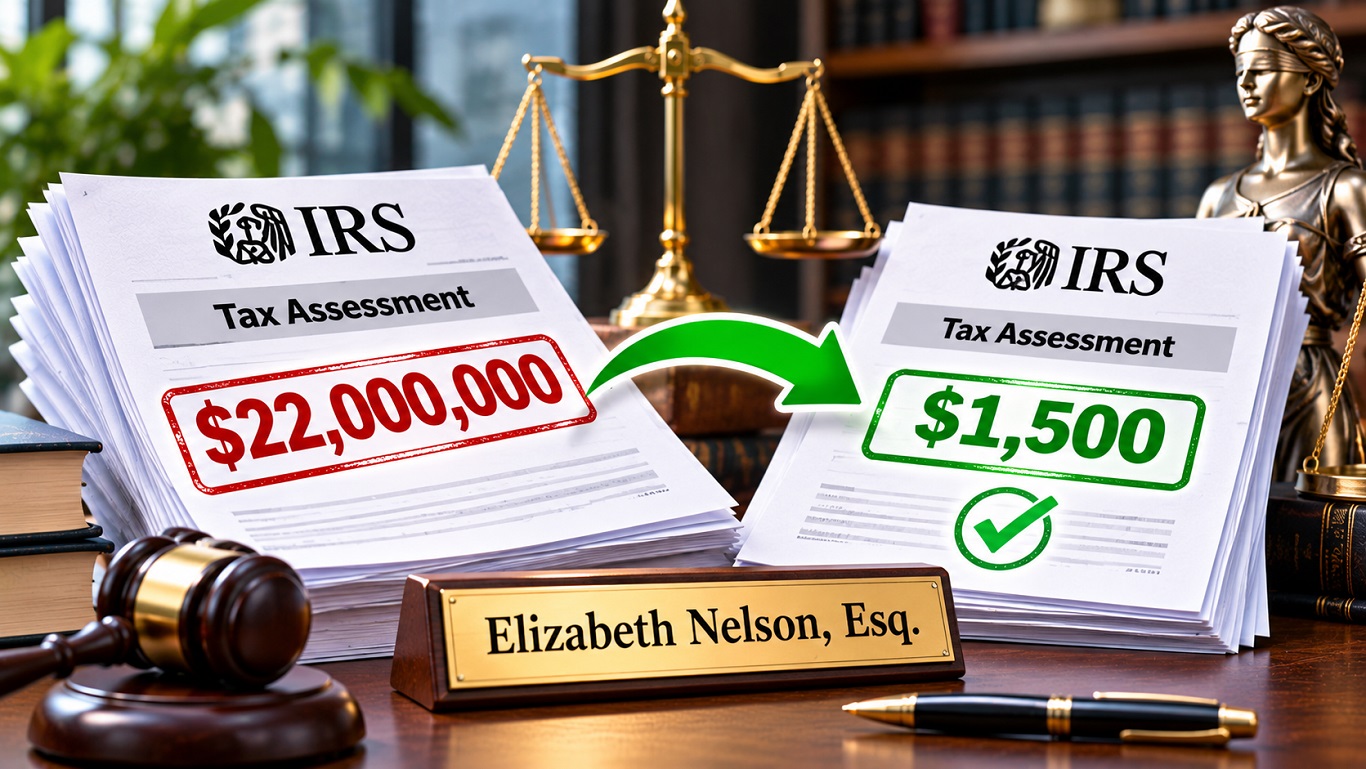
Table of Contents
- Overview: Challenging a $22 Million Tax Assessment
- The Challenge: A Significant IRS Tax Liability
- The Legal Approach: Innocent Spouse Relief and Tax Court Proceedings
- The Outcome: Assessment Reduced to $1,500
- What This Case Demonstrates About Innocent Spouse Relief
- Facing a Significant IRS Tax Assessment?
Practice Area: IRS Innocent Spouse Relief
Tax Authority: Internal Revenue Service (IRS)
Proceeding: United States Tax Court
Attorney: Elizabeth Nelson, Esq., LL.M. in Taxation
Reported Outcome: Assessment reduced from $22 million to $1,500
Overview: Challenging a $22 Million Tax Assessment
Facing a multimillion-dollar IRS tax assessment can place an extraordinary financial burden on an individual. When a tax liability arises from a spouse’s tax affairs, determining whether the assessed individual should be held responsible can require careful legal analysis and a thorough understanding of federal tax law.
In this case, Elizabeth Nelson, Esq., represented a matter involving a wife’s $22 million IRS assessment and proceedings before the United States Tax Court. According to Leading Tax Group’s case records, the assessment was reduced to $1,500, representing a substantial reduction in the reported amount.
The case demonstrates the importance of examining the circumstances surrounding a tax liability and evaluating whether innocent spouse relief may be available under applicable federal tax law.
The Challenge: A Significant IRS Tax Liability
The central issue involved an IRS assessment of approximately $22 million against a wife. Tax liabilities involving a spouse can raise complicated questions about responsibility for reported income, tax deficiencies, penalties, and other amounts assessed by the IRS.
In appropriate circumstances, innocent spouse relief may allow a taxpayer to obtain relief from some or all of a joint tax liability when the requirements of federal law are satisfied. Eligibility depends on the relevant facts, the type of relief requested, and the applicable legal standards.
Because the reported assessment was substantial, resolving the matter required proceedings in which the taxpayer’s position could be considered through the United States Tax Court.
The available case summary does not provide the underlying tax years, the IRS’s original legal theory, or the specific facts supporting the relief request.
The Legal Approach: Innocent Spouse Relief and Tax Court Proceedings
Elizabeth Nelson’s documented background includes a clerkship with the United States Tax Court, where she researched and drafted opinions involving regular, small, and special-project cases. She also holds a Master of Laws in Taxation from New York University School of Law.
These credentials provide relevant context for her work in federal tax controversy matters. In an innocent spouse case, legal analysis may involve reviewing the tax assessment, examining the taxpayer’s circumstances, identifying applicable relief provisions, and evaluating the procedural options available.
The reported matter proceeded through the United States Tax Court. However, the available case summary does not identify the particular arguments, evidence, statutory provisions, or procedural rulings that led to the outcome. Accordingly, this case study does not attribute a specific litigation strategy or judicial finding that has not been documented.
The Outcome: Assessment Reduced to $1,500
According to Leading Tax Group’s success-story records, the wife’s original $22 million IRS assessment was reduced to $1,500 through proceedings in the United States Tax Court.
This represents a reported reduction of $21,998,500, or approximately 99.993% of the original assessment.
The outcome illustrates how a substantial tax assessment may be challenged through appropriate legal proceedings when the facts and applicable law support relief. It also highlights why taxpayers facing significant liabilities should evaluate their available rights and options rather than assume that an initial assessment is necessarily the final result.
What This Case Demonstrates About Innocent Spouse Relief
Innocent spouse relief is a federal tax provision that may relieve an eligible taxpayer from responsibility for certain tax liabilities associated with a joint return. The IRS evaluates eligibility under specific legal requirements, and some disputes may proceed through administrative appeals or the United States Tax Court.
This case offers three important takeaways:
- Examine the basis of the assessment: Understand which tax years, liabilities, penalties, and legal grounds are involved.
- Evaluate potential relief carefully: Innocent spouse relief is fact-specific and is not automatically available simply because a liability originated from a spouse’s tax affairs.
- Understand procedural rights: The appropriate administrative or judicial route depends on the case’s circumstances and procedural status.
Facing a Significant IRS Tax Assessment?
Leading Tax Group helps individuals and businesses evaluate tax controversies and understand potential resolution options. If you are facing a substantial IRS assessment or believe you may qualify for innocent spouse relief, a review of your tax records and circumstances can help identify possible next steps.
Contact Leading Tax Group to discuss your IRS tax concerns and explore the options available for your situation.
 800-900-4250


