



AB 1482 Explained, a Guide for California Tenants and Landlords
On: June 4, 2026
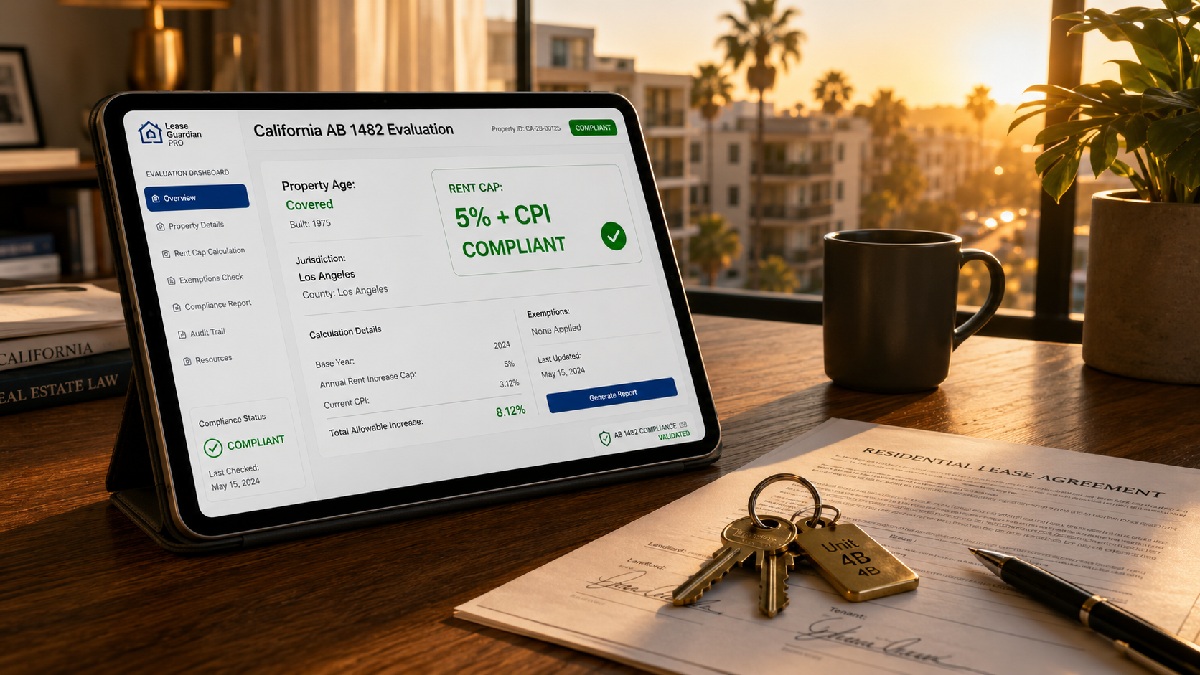
Lately, housing in California seems harder to handle, costs are climbing, and spots are shrinking. Because leases cost more, openings are rare, laws shift often, and people who rent or own rental units aren’t always clear on their options. One force remaking how renting works? Look at AB 1482 – a rule from 2019 designed to shield renters.
Although the purpose of the law is to keep renters from being evicted or charged excessive rent, many people in California are still asking themselves, “Does this law apply to my property?”
Familiarity with AB 1482 can assist tenants in preventing illegal rent increases and can also assist landlords in complying with the law, while at the same time safeguarding their property investment.
What Is AB 1482?
AB 1482 added two big statewide renter protections:
- Limits on annual rent increases
- Restrictions on the use of “Just Cause” evictions. Restrictions on ‘Just Cause’ evictions.
While many residential housing units are subject to the law, not all housing units are subject to it.
The landlord may only increase the rent on a covered property by the amount of:
- 5% plus the local inflation rate (CPI)
- Or 10% total (or lower)
Such limits are determined each year.
The law also does not allow the landlords to evict the tenant after 12 months of the tenant staying in the house without any legal reason.
Is Your Apartment Covered?
A major uncertainty is whether a property qualifies for the AB 1482 exemption.
Properties Commonly Covered
- Multi-family apartment buildings
- Property older than 2010 that an organization or an LLC rents out.
- A wide range of duplexes and condo rentals
Common Exemptions
The following are exempt:
- One person owns these houses – no company involved. Ownership stays with private folks instead of big real estate groups. Trusts or corporate entities don’t manage these properties. People hold titles themselves, not through business structures. Homes like this skip institutional investors completely
- Owner-occupied duplexes
- Housing that was constructed in the past 15 years.
- Some of the affordable housing units
- A roof for those with little money – some live in shared rooms, others get homes managed by officials
- Should AB 1482 not apply, the landlord provides notice in writing. When that hasn’t arrived, tenants seek answers.
A Guide for People Who Are Impacted by “Just Cause” Evictions
The eviction process is split into two categories by AB 1482:
At-Fault Evictions
These occur when a tenant fails to abide by the terms of the lease agreement. Examples include:
- Nonpayment of rent
- Criminal activity
- Significant property damage
- Repeated lease violations
No-Fault Evictions
These happen when the tenant was not in any way responsible for the damage, but the landlord still needs the unit for a legitimate reason, like:
- Owner move-in
- Major renovations
- Excluding the property from the rental market.
For no-fault evictions, landlords are required to offer relocation assistance of one month’s rent in many cases.
Tips for Tenants
Tenants can take steps to safeguard themselves by being organized and informed.
Helpful Steps
- Maintain copies of rental agreements, rental receipts, and notices.
- Communicate with landlords in writing.
- Watch out for annual rent hikes!
- If exemption notices were not given, request exemption notices.
- Check with local rent boards for information.
Tenants also need to be cognizant that certain cities offer better protections than the state law.
Tips for Small Landlords
The state of California’s ever-changing housing laws can overwhelm mom-and-pops. Proactive measures can reduce legal hassles.
Best Practices
- Adopt up-to-date lease agreements. Adopt current lease agreements (legally).
- Ensure accurate exemption statements are made
- Maintain maintenance logs.
- Ensure clear and professional communication with tenants.
- Check the city’s bylaws frequently
The use of templates on the internet or verbal agreements shouldn’t be used by landlords.
LRSBs Matter
There are also many cities in California with their own rent control laws and regulations that are more stringent than AB 1482.
Some cities have rent control on their own, and may have:
- Los Angeles
- San Francisco
- Oakland
- Berkeley
- Santa Monica
Local compliance may be required in addition to the statewide standards, set aside by these local regulations. Sometimes the local regulations override statewide provisions, so compliance with the local rules is required to adhere to statewide rules.
A Checklist Is a Good Tool to Save Time When It Is Downloadable
Tenants and landlords can both work to apply a simple “Is My Apartment Covered?” checklist that contains:
- Property age
- Ownership type
- Number of units
- Occupancy status
- Rules of local rent control.
Looking at these briefly might stop confusion, arguments, or expensive errors in court. Sometimes, just a glance changes how things turn out later.
One thing about California: its housing rules never stay still. Grasping AB 1482 isn’t just useful anymore – it’s necessary. Whether you’re leasing a studio unit or managing one rental house, clarity on tenant duties matters. Knowing what applies to you helps keep living situations steady. Unexpected disputes? Less likely when boundaries are clear.
FAQ
1. What about AB 1482 in California?
Yearly rent hikes now face limits because of a law labeled AB 1482, sometimes known as the California Tenant Protection Act. Not every building falls under this policy, even though it covers locations across the entire state. What matters is what kind of structure stands there – along with who lives inside.
This law guards renters from sudden hikes or unfair removals, though some housing stays outside its scope. Not every home qualifies under these rules, but most do. Since going into effect, it has reshaped what stability looks like for thousands of people who pay monthly rent.
2. How to know about the rental property exemption from AB 1482?
Most landlords must give a written heads-up when the building isn’t included. Newer constructions, certain houses meant for one family, along with duplexes lived in by the owner, might escape the rule.
3. What is the meaning of Just Cause eviction?
Eviction isn’t allowed without cause once someone has stayed in a home for a full year. A missed payment might justify it. So could serious rule breaking spelled out in the rental agreement? Reasons need to match what the state law counts as acceptable. Landlords can’t remove people just because they want to.
4. Can local rent control laws override AB 1482?
It’s accurate. Cities like Los Angeles or San Francisco sometimes push past state standards to protect tenants. With stricter caps on rent hikes, they take a harder line – landlords face narrower room to increase charges. Tenant safeguards there might include extra notice periods before eviction. Rules differ depending on the neighborhood’s specific ordinances. Some protections simply do not apply outside those areas. Local policies shape what renters are entitled to. State guidelines form a base – cities build on top.
5. How to stay compliant with tenants and landlords?
Start by keeping a copy of each note and document you receive. Every clause in lease agreements deserves attention, one after another. Updates pop up in tenant laws more often than expected. When unsure settles in, get answers straight from a local housing authority.

 800-900-4250


