



How EDR 2.0 Can Act as an AI-Powered Tax Audit Machine?
On: June 9, 2026

Table of Contents
- Introduction to California's EDR System
- The Data Sources Being Cross-Matched
- Business registration records
- The Emergence Of ‘Algorithmic Corrections’
- The Importance of Fast Responses
- What are Typical Factors That Can Be a Cause for Concern?
- Have Separate Business and Personal Accounts
- Why Human Judgment Still Matters?
- The Future of California Tax Enforcement
- FAQ
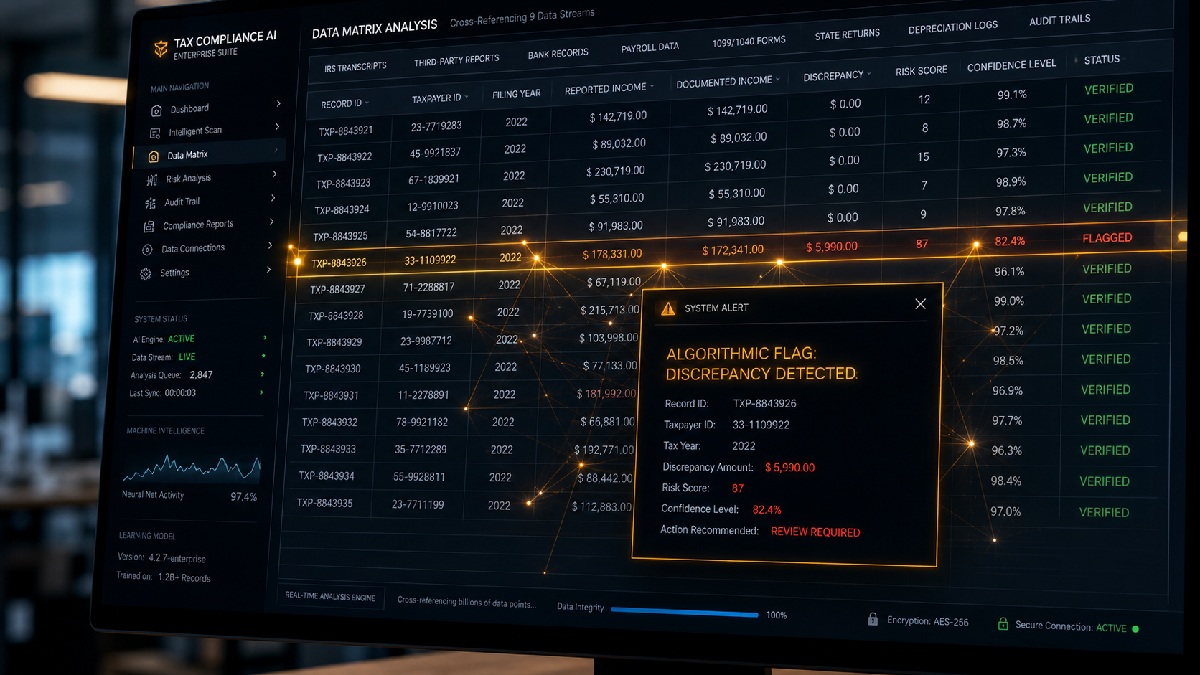
California is moving to a new era in tax enforcement — and at a much brisker pace than many taxpayers are aware of. The old method of having an auditor take months to manually review documents is fast becoming a thing of the past, with automated systems now able to detect any irregularities almost instantly.
The crux of this change is the Franchise Tax Board’s more advanced system, called Enterprise Data to Revenue (EDR), which tax experts increasingly view as a formidable AI-powered compliance engine. Man does not just govern the system, but it continually cross-checks huge volumes of financial data to look for inconsistencies, missing income, and mismatches in reporting.
For freelancers, business owners, and gig workers, tracking the inner workings of this automated environment is no longer a choice.
Introduction to California's EDR System
The Enterprise Data to Revenue (EDR) program aims to modernize California’s tax compliance identification process.
Audits were previously done only after clear indicators arise but now the system does:
- Combines financial reporting information
- Performs automated matching
- Identifies inconsistencies in actual time
- Produces algorithmic error notices
- Focuses on high-risk discrepancies for enforcement
California’s tax schemes now work more like sophisticated “fraud detection software” in banking and cybersecurity, according to the simple explanation.
The Data Sources Being Cross-Matched
A major misunderstanding that taxpayers have is that they think smaller income streams are still “invisible.” In fact, there are massive reporting trails in digital payment ecosystems today.
The system can compare:
- IRS federal tax return information
- Filing of the State of California state tax returns.
- 1099-NEC and 1099-K forms
- W-2 wage reports
- Venmo business transactions
- Stripe payment records
- PayPal merchant activity
- Cryptocurrency reporting data
- Marketplace platform income
Business registration records
Automated notices can be generated for even minor discrepancies.
For example:
- Reporting $45,000 in gross business income versus $58,000 reported by payment processors
- Taking deductions that are outside of average industry practice
- Any side-gig income not reported on the California return that is reported on a federal return.
- Not reconciling more than one 1099 form.
These inconsistencies are usually detected by algorithms, rather than by a human reader, before a human reader is even involved.
The Emergence Of ‘Algorithmic Corrections’
Today, tax collection is highly automated.
Instead of conducting a full audit right off the bat, the system can give you the following warning(s):
- Proposed tax adjustments
- Automated underreporting notices
- Requests for clarification
- Balance due assessments
- Penalty calculations
These are sometimes referred to as “algorithmic corrections,” as they are created as the result of data-matching logic instead of investigative audits.
This gives taxpayers a false sense of security, as if an auditor had not approached them, so the problem cannot be that large.
This assumption can cost a lot of money.
The Importance of Fast Responses
California has been toughening up on late payment enforcement.
The reporting period has shown significant increases in penalty assessments, and late-payment penalties have seen significant increases over recent years. If automated notices are not paid, additional penalties and interest may “add up fast.
A minor difference between two has the potential to become:
- Accrued interest charges
- Collection actions
- Wage garnishments
- Tax liens
- Bank levies
- Expanded audits to previous tax years
Delays are no longer cushioned by slow administration processes, thanks to the automation of EDR.
What are Typical Factors That Can Be a Cause for Concern?
Not all discrepancies lead to enforcement, but there are some patterns that regularly catch the attention of algorithms.
High-Risk Reporting Issues
- Income reported to the Federal government, but not to California.
- Significant drop-offs in deductions from prior years.
- Major transactions that involve cash payments.
- Excessive business losses
- Mismatched 1099-K totals
- The income that has not been reported to the IRS.
- Inconsistent residency claims
Digital Payment Risks
A lot of taxpayers think that peer-to-peer platforms are private.
But business transactions that are carried out via:
- Venmo
- Cash App
- Stripe
- PayPal
- Square
can produce reports that will eventually be integrated into larger compliance systems.
The distinction between personal and business use is more than critical; it’s vital.
In the EDR era, how to protect oneself
No automatic enforcement is better than proactive data integrity.
Maintain Accurate Recordkeeping
Ensure:
- Bank deposits are equal to the reported revenue
- 1099 totals reconcile properly
- The business records are kept in accurate and complete records.
- Digital payment platforms are correctly classified.
Put together Federal and State Returns
One of the most frequent causes is when:
- Federal returns have information that is not included in California returns.
- The income of agencies varies from business to business.
- The estimated payments do not match
- Carefully compare the two before submitting.
Do what the Notices Tell You to Do Immediately
One of the worst tax errors is overlooking notices from the IRS.
Although the assessment may look wrong:
- Respond within deadlines
- Seek clarification if necessary
- Provide supporting documentation
- Get professional tax advice along with haste.
The absence of a voice can set off a “default” escalation.
Have Separate Business and Personal Accounts
It becomes difficult to maintain clarity for taxpayers and automating systems if you use the same payment account to receive business income and make personal payments.
Special business accounts are used to help:
- Improve documentation
- Reduce false mismatches
- Simplify audits
- Support legitimate deductions
Why Human Judgment Still Matters?
While automation is being used to generate enforcement, algorithms are not infallible.
Systems may:
- Misclassify transfers
- Double-count payment streams
- Misinterpret reimbursements
- Mark authentic deductions as bogus
That’s why it is still important to conduct professional reviews when notices are received.
A skilled tax expert is able to:
- Identify reporting mismatches
- Challenge incorrect assessments
- Prepare supporting evidence
- Negotiate penalty relief
- Take measures to avoid expanding the scope of the audit.
The Future of California Tax Enforcement
California’s tax systems are a step-by-step journey toward real-time automated, predictive, and integrated financial reporting compliance monitoring.
On the other hand, the message to taxpayers is clear:
The audit process is no longer started with a phone call or office visit. Many times, it begins discreetly with algorithms that look at data in the background. This is making consistency, consistency, and super quick response the mantra of modern tax compliance. In the EDR 2.0 world, clean data isn’t just a booking choice anymore; it’s a fundamental level of financial security.
FAQ
1. What is California’s EDR system?
Out of nowhere, California rolled out its Enterprise Data to Revenue setup – a method built to catch tax slips fast. Instead of waiting, it lines up financial records using smart software that spots gaps in what people report versus what they earn. Hidden mismatches come to light when algorithms compare piles of info without slowing down. Speed matters here, since delays mean lost revenue. This way, odd patterns get flagged before they pile up into bigger problems.
2. Do Stripe transactions lead to tax notices?
Got it. When you move money for work using apps such as Venmo, Stripe, PayPal, or Cash App, those actions might leave traces. These digital footprints could line up with what you report on your taxes – both state and federal. The connections aren’t automatic, yet they exist beneath the surface.
3. How to handle an automated FTB notice?
Start right away. Look over the notice closely – collect your paperwork while fixing mistakes without delay because skipping automated alerts might bring extra fees, added charges, plus enforcement steps.
4. Are algorithmic corrections the same as a full audit?
True, not every alert means trouble right away. These automatic warnings often pop up when numbers just do not match. Yet a problem left unattended might slowly grow sharper attention from reviewers later on. Over months, small gaps could invite deeper looks without warning.
5. How to reduce the risk of automated tax flags?
Start by keeping every dollar tracked right the first time. Match up those 1099s carefully against what goes on your taxes. Draw a clear line between money spent on work versus daily life costs. Hold off sending anything until both state and national paperwork tell the same story.

 800-900-4250


