



How to Avoid the Golden State Tax Trap for Remote Workers?
On: November 15, 2025

You live the dream, you are a California resident who works remotely and works in a progressive-oriented organization that is either in a low-tax or tax-free state such as Texas, Florida, or Tennessee. You can enjoy the sun of California and the California culture without the commute every day. Then tax season comes round and you find yourself, to your unpleasant surprise, with a huge tax bill with California tax written on it.

So, what are you going to pay taxes to California when you have a source of employer and a paycheck in Texas? The solution is found in one of the most basic and yet the most misinterpreted concepts of California tax law, the fact that California taxes its citizens on their global income, irrespective of the location of their employer.
Understand the Depth of The Problem
The fact is that you are a California resident. To be considered a resident of California, for taxes, it is important to note that you spend in the state more than nine months of the tax year, or your presence in the state is not temporary or transitory. Being a resident will expose you to California to the California state income tax on all your income, be it earned with a company based in California or with headquarters in New York.
Your boss, however, exists according to the legislation of his state. Unless they live in a state that has no income tax (such as Texas or Florida), they will probably not subtract any state taxes from your paycheck. In case they are located in a state that has an income tax (such as New York or Massachusetts), they must remit the taxes to that state.
How to Create a Financial Shield for Yourself?
Fortunately, there is a way out of this injustice available in California, which is the Credit for Taxes Paid to Another State (also called a tax credit). It is not an inference; it is a dollar-for-dollar cut of your California state tax bill.
How to Fix This Tax Nightmare?
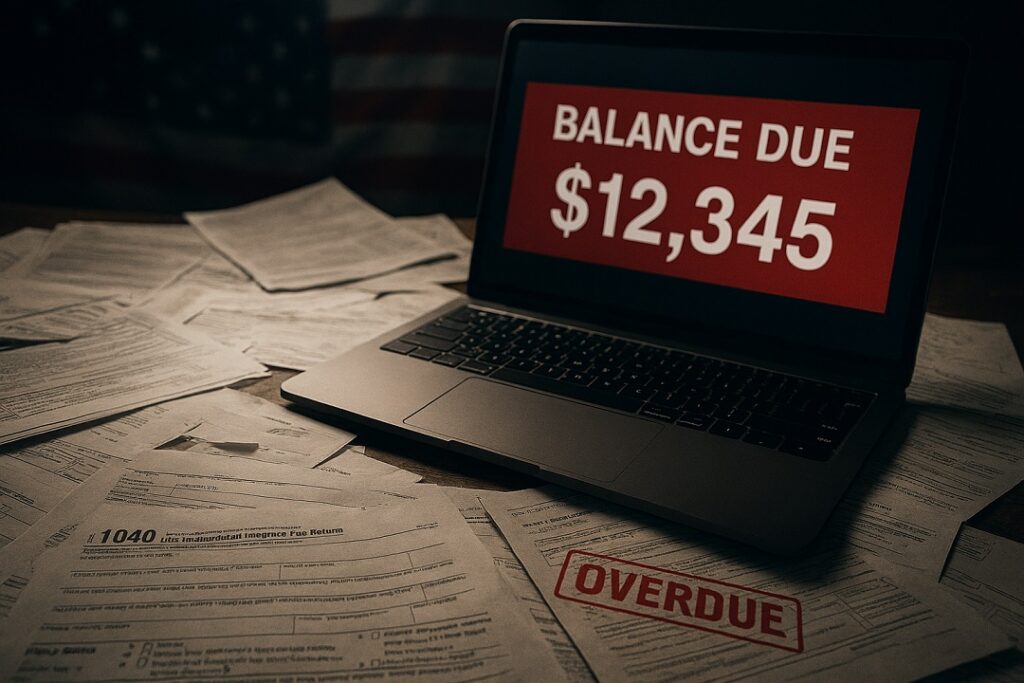
Poor withholding is the most frequently occurring point of failure. A good number of remote workers with out-of-state employers do not get a penny deducted by their employer on state taxes. This is wonderful all through the year until you submit your return, only to find that you now have to pay the full amount of California tax, with one lump sum at the end of the year, plus a possibility of an underpayment penalty.
Steps We Must Take to Avoid Any Future Issues
a) Mock Audit
Right now, confirm that your pay stubs are accurate. Is the state income tax being withheld? At least it is withheld from the state of CA. In case of nothing withheld, you have to act.
b) Request Withholding
The easiest course of action is to inquire with your employer whether or not he/she will be filing California taxes. A lot of large and multi-state companies are endowed with the ability to do so. And as far as they are in consensus, they will begin deducting CA tax on your paychecks.
c) Estimated Tax Payment
When the employer is unable or unwilling to deduct California tax, you are liable to do so. You have to pay quarterly estimated tax to the California Franchise Tax Board (FTB). This will entail computing your anticipated tax amount and paying it in four installments during the year (April, June, September, and January).
d) Keep all the Records
In case you are working in California and sometimes you travel to the home state of your employer to work, maintain an excellent record of your working days. You might be required to record your earnings, and it is very important to have a clear record just in case an audit is conducted.

Learn about the Dreaded CA Residency Audit
The FTB in California is known to be very aggressive in protecting its tax base. In case you assert non-residency or present a tax credit, you have to be ready to show your residence status.
Be Prepared to Demonstrate:
- You are a California resident (driving license, voter registration, etc.).
- The place you do most of your business.
- Assuming you spend part of your time in one state and part in another, you will need to establish what your domicile is – your hometown or city, the one you are there most of the time.
Key Points for Remote Workers
These are delicate waters that need to be navigated for your financial good. To summarize:
- The fact that your employer is out of state does not make you evade CA tax.
- Your first protection against the tax of the tax is the Credit of Taxes Paid.
- They should avoid large and unexpected tax bills and penalties, and so, in lieu of that, it is not negotiable to make proactive withholding or estimated payments.
- It is better to document everything when you are in a complicated situation or when travelling.
Telecommuting provides unbelievable freedom, and at the same time, does not liberate you from taxes. You will be able to spend the best years of California living and avoid the double tax trap by knowing the rules and planning in advance. Although there are no certain rules or regulations, it is always a good investment to consult a specialist in tax matters who is qualified to deal with multi-state matters.
FAQ
What are the aspects we learn about ‘Credit for Taxes Paid to Another State’?
It costs you a dollar on your California tax return as a credit on your income tax paid to another state on the same income. It averts the occurrence of a double tax, whereby you end up paying a higher tax in both states where you earned such income.
Do I have to pay state tax if my employee is in Texas?
Yes. California levies the tax on the global money of the locals. In Texas, there is no state income tax, so your employer withholds nothing. The full CA tax bill is imposed on you, and the payment may take place in the form of estimated quarterly payments or by requesting CA withholding.
Should I pay double taxes if my employer is in another state?
No, but you have to make correct filings. File a New York non-resident and a California resident return. To prevent being taxed twice, claim the taxes you paid to New York on your California return as a Credit for Taxes paid.
What will happen when my employer doesn’t hold any state taxes?
At tax time, you will be subject to the full sum of California tax in a lump sum with underpayment penalties. To prevent this, you need to pay quarterly estimated payments in taxes to the California Franchise Tax Board during the year.
How to proof that I am a resident of California?
A center of life will be sought by the FTB. Examples of evidence are your CA driver’s license, voter registration, vehicle registration, your place of residence, and place of ownership. The place of work is also a very decisive element.

 800-900-4250


